
Pure N Natural Systems
Everything Cool About a Portable Air Conditioner

Imagine effortlessly bringing a refreshing breeze to any room in your home, exactly when and where you need it. Portable air conditioners offer this flexibility and convenience, making them an excellent choice for personalized comfort.
Why Choose a Portable Air Conditioner?
- Simple Setup: No complex installation here—just plug it in, vent it out a window, and enjoy immediate cooling.
- Move with Ease: Designed with mobility in mind, you can easily roll your unit from the sweltering kitchen to your cozy bedroom, ensuring comfort throughout your home.
- Preserve Your View: Unlike bulky window units, portable air conditioners take up minimal window space, allowing natural light to brighten your room.
- Budget-Friendly Comfort: Enjoy the luxury of cool air without the hefty price tag of central systems. Portable units are cost-effective both in purchase and energy consumption.
Considerations to Keep in Mind
- Ambient Sound: While they bring coolness, portable units may produce more noise since all components are inside your space.
- Ventilation Requirements: Ensure you have access to a window or vent for the exhaust hose to release warm air outside.
- Room Size Matters: Ideal for single rooms, these units might not effectively cool large, open areas or multiple connected spaces.
Features Tailored to Your Needs
- Single vs. Dual Hose: Dual-hose models can cool your room more efficiently by separating intake and exhaust functions.
- Dehumidifying Perks: Many units also reduce humidity, making your space not just cooler but more comfortable.
- User-Friendly Controls: Look for features like programmable timers, remote controls, and adjustable fan speeds to customize your cooling experience.
Finding the Perfect Fit
- Size It Right: Match the unit's BTU rating to your room size for optimal cooling.
- Factor in Room Characteristics: Consider elements like sunlight exposure, ceiling height, and the number of occupants to choose the most effective unit.
Investment Insights
- Affordable Options: Home models typically range from $310 to $400, offering a cooling solution that won't break the bank.
- Maintenance Made Easy: Keep your unit running smoothly with regular filter cleaning and by ensuring proper moisture drainage.
By exploring the complete guide, you'll discover how portable air conditioners can enhance your home's comfort with flexibility and efficiency, helping you make an informed decision tailored to your cooling needs.
Let's Get Started!
During the warmer months of the year, there are so many ways to stay cool at work and home. Sometimes opening a window or turning on a fan doesn’t regulate the indoor temperature enough and you need an affordable solution to make a bigger cooling impact. In commercial and industrial settings, you may need to offset the heat generated by electronics and protect your assets and property.
If you’re looking for something that’s easier to install than an HVAC system and even more flexible than a window unit to cool your indoor space, portable air conditioners offer unparalleled flexibility. Unlike traditional central air conditioning, these smaller units—also called portable spot coolers—are energy efficient, mobile and easy to install and use.
Portable air conditioners may sound appealing if you need a cooling option that’s as simple as removing it from the box, venting it and plugging it in. They offer quick and easy comfort and cooling—there’s less time and hassle involved in installation!
Portable units also offer a solution for smaller spaces and the attractive feature of being easy to move.
Some factors you want to consider when comparing different types of air conditioning units: size of space, the importance of flexibility or portability, efficiency needs, noise concerns and installation requirements. When does a portable air conditioner make the most sense?

The Benefits of a Portable Air Conditioner Unit
There are several potential benefits to choosing a portable air conditioner over another type of indoor cooling solution. These include:
Installation
The top attribute of portable air conditioners is probably the ease of installation. Basically, you get to bypass installation with a portable unit—just plug it in, vent it and start using it. You’re all set!
Window units require handyman skills and heavy lifting for installation, while an HVAC system will require professional expertise. You may not have the time, budget or capacity to deal with the disruption of installing an HVAC system. Portable air conditioners emerge as a clear winner in cases where you want to be able to take something out of the box and start cooling ASAP.
Portability
Just as the name suggests, portable air conditioners can be easily moved around. That’s a benefit if your cooling needs tend to rotate, if you move a lot or need something to cool a space only periodically, and want to store it at other times. Window units are portable, but take more effort to install and pack away.

Space
Small portable air conditioners are engineered to cool smaller spaces, such as a single room in a home office or space. They are ideal for spaces around 550 square feet. In larger spaces, they can compromise efficiency, so you may want to consider a window unit if your space is on the larger side but you still want some ease of installation and portability.
Window Usage
Window units block the natural light coming through the window in which you mount them, and prevent you from using the window for fresh air or easy egress if needed. If you only have one window in a room, you especially may not want to block it. The venting kits required of portable air conditioners take up significantly less space, allowing natural light to still filter through your windows.
Depending on the construction of the building, your windows might not even be able to support a heavy window air conditioning unit, making a portable air conditioner your only non-permanent AC option.
Other benefits
Drainage from window units might fall on pedestrians if your window is positioned above a sidewalk or a high traffic area. Window units aren’t the most aesthetically pleasing—you may not want one jutting of your building’s exterior. Window units can also cause damage and injury if they fall, leading some building owners to ban them entirely. If you’re renting a space, you might not even be allowed a window unit for this or another reason. Portable units are also easy to move and store if you change living or office spaces.
If you have an HVAC system that struggles to effectively cool an interior, a portable air conditioner offers an option to spot cool a room such as a sleeping area, nursery, office, server room or the like.

Depending on your needs, a portable air conditioner can also be cost effective. You can cool strategically—in the room you're using—rather than cooling a whole building or house, racking up utility bills. Saving energy benefits the environment, as well as your wallet.
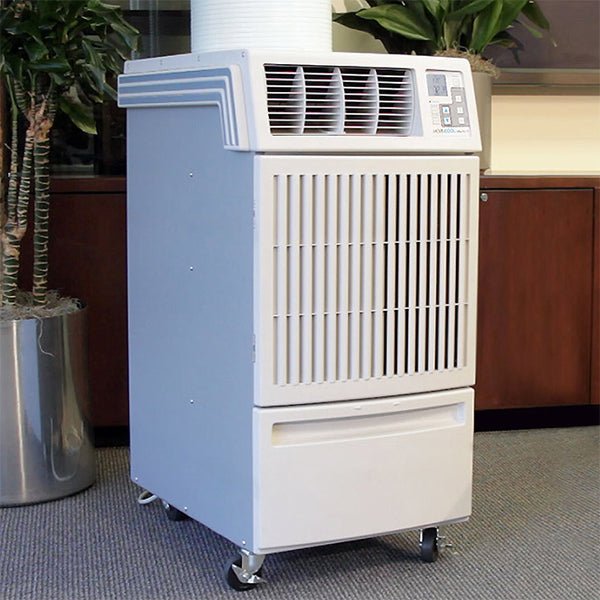
Indoor Air Conditioners
View DetailsPotential Cons of Portable Units
Window and portable air conditioners both generate more noise than central AC. In some cases, portable units can be noisier. Even though the motor from a window unit can be noisy, the noise is typically directed outside of the interior. If you plan to use your AC in a room where you sleep or otherwise need peace and quiet, a portable model might disturb you. That said, most units come with a noise level rating, measured in decibels (dB). Talk to an indoor environmental solutions expert about what you can tolerate in your space.
Despite the fact that portable air conditioners are more flexible than window air conditioning units, they still do require you to vent them outdoors. So even though they don’t sit in a window, they will still need to be positioned near a window, door or another vent to the outdoors. Some units may be capable of venting through a ceiling or wall.
Certain types of windows, such as casement windows, may not work with portable units. Talk to an indoor environmental specialist if you have any concerns about operating a portable unit in your space.
If you need to cool multiple rooms, portable air conditioners may not be the best choice. They are effective for cooling the immediate area, but will not work well for interiors connected by hallways or narrow entryways. When appropriately sized, they work best for cooling an open area.
Besides the noise, other potential cons to choosing a portable air conditioner could include the need for something more permanent, covering a larger square footage than what portable units can take.
Portable Air Conditioner Features
Some portable air conditioning units come with single hoses, others come with two. What’s the difference?
Single-hose
Use the same hose for air intake and exhaust. They are less efficient but often cheaper. Consider these for smaller spaces.
Dual-hose
Use separate hoses for air intake hose and exhaust. They tend to have better energy efficiency, which means they cool more quickly. Consider these for larger spaces.
Any portable air conditioning unit should feature a couple of specifications related to moisture removal and power, along with various additional features. First, the numbers you are likely to see on any given unit include:
Capacity for moisture removal
The amount of moisture a unit removes will vary and is likely to be measured in pints per day (PPD).
Cooling BTUs
Portable air conditioners are rated by BTUs (British Thermal Units), which indicate how much heat a unit can remove from a space per hour. Higher BTU ratings provide greater cooling power and are especially important for commercial and high-heat environments. Portable air conditioners are available in a wide range of capacities, from approximately 9,000 BTU to over 60,000 BTU, allowing buyers to select a unit based on room size, heat load, and use case.
In addition to BTUs, product specifications often include airflow (CFM), voltage, wattage, amperage, noise level, dimensions, weight, and cord length. Reviewing these details helps ensure the unit is compatible with both the space and available power supply.
Some features that may be found on a portable air conditioner include:
- Programmable on/off timer
- Programmable remote control
- Digital thermostat
- Touch display panel
- Multiple fan speeds
- Auto restart for loss of power
- Auto and sleep settings
Because they are meant to be moved around, most will come with wheels or castors to facilitate mobility.
Indoor Air Conditioners
Air Conditioning Replacement Parts & Filters
Want a deeper look at how portable air conditioners work and when they make sense? Read our complete guide on what’s cool about a portable air conditioner.
What Size to Get
You may be wondering exactly how to properly size a portable room air conditioner before you make a purchase, especially online. It’s important to find the perfect size because a unit that’s too small will fail to cool a room—but if you buy more air conditioner than you need, it will work inefficiently.
First figure out the square footage of the room you need to cool using the simple formula of length times width for square or rectangular spaces. If you need to cool a triangular room, multiply the length and width of the room then divide by two. Once you have determined the room’s square footage, use the following chart as a guideline for how much power your unit needs:

Some units are built for larger commercial spaces that require significantly more cooling power. For example, the MovinCool ClimatePro K63 delivers 60,000 BTUs of portable spot cooling, making it ideal for warehouses, manufacturing floors, and other high-heat environments.
You should make adjustments to the cooling capacity which is needed if any of the following factors apply:
- The room is heavily shaded: Reduce capacity by 10 percent
- The room is very sunny: Increase capacity by 10 percent
- Three or more people regularly occupy the room: Add 600 BTUs per person
- The room is a kitchen: Increase capacity by 4,000 BTUs
If your ceilings are higher than standard, you will also want to increase the number of BTUs. If you only need to run your unit during the evenings, you may also be able to get away with less power, but running the unit all day long during peak temperatures may require more.
What to Budget
A quality portable air conditioner for home or small-scale use can run between about $310 to $400, so they are certainly a more affordable option than installing an HVAC system. Window units can cost as little as $130 at big box stores but easily run into the same price range or higher. Most people and businesses find this level of portable air conditioners a cost-effective option.
If you need a portable air conditioner for use on a larger scale, your costs could run about $3,900 to $13,000+. Electrical specs may run a little higher for some models of these larger scale units — up to 460 Volts. Make sure you have the electrical capacity to handle the unit you plan to purchase.
In terms of maintenance, your unit may have a filter you need to periodically wash or replace. Follow the manufacturer’s instructions to prevent wear and tear and ensure that your unit operates efficiently. Some portable air conditioning units may collect moisture. They may be designed so that the collected moisture fully evaporates or you might need to install a pump and drain or periodically empty a container that collects the water.
Portable air conditioners offer flexible, efficient cooling when you choose the right size and features for your space, making them a smart solution for temporary or supplemental comfort.
An indoor environmental systems specialists can help assess the portable air conditioner needs of your home or business and identify the right model to keep you cool and comfortable.
Want a printable version of this article?

A practical buyer’s guide explaining how portable air conditioners work, their benefits, and what to consider before choosing one.
Best for:
Facility managers, business owners, and homeowners who need flexible, temporary, or supplemental cooling without installing permanent HVAC systems.